Expansion of Employment Opportunities for Women
The project aimed to contribute to national efforts toward poverty alleviation by enhancing the socio-economic status of women and promoting gender equality and social justice. The first phase of the project was implemented from March 1999 to July 2001, while the second phase was implemented from August 2001 to June 2003.
| Donor | ILO |
| Start date | March 1999 |
| End date | July 2003 |
| Project Districts | Nuwakot |
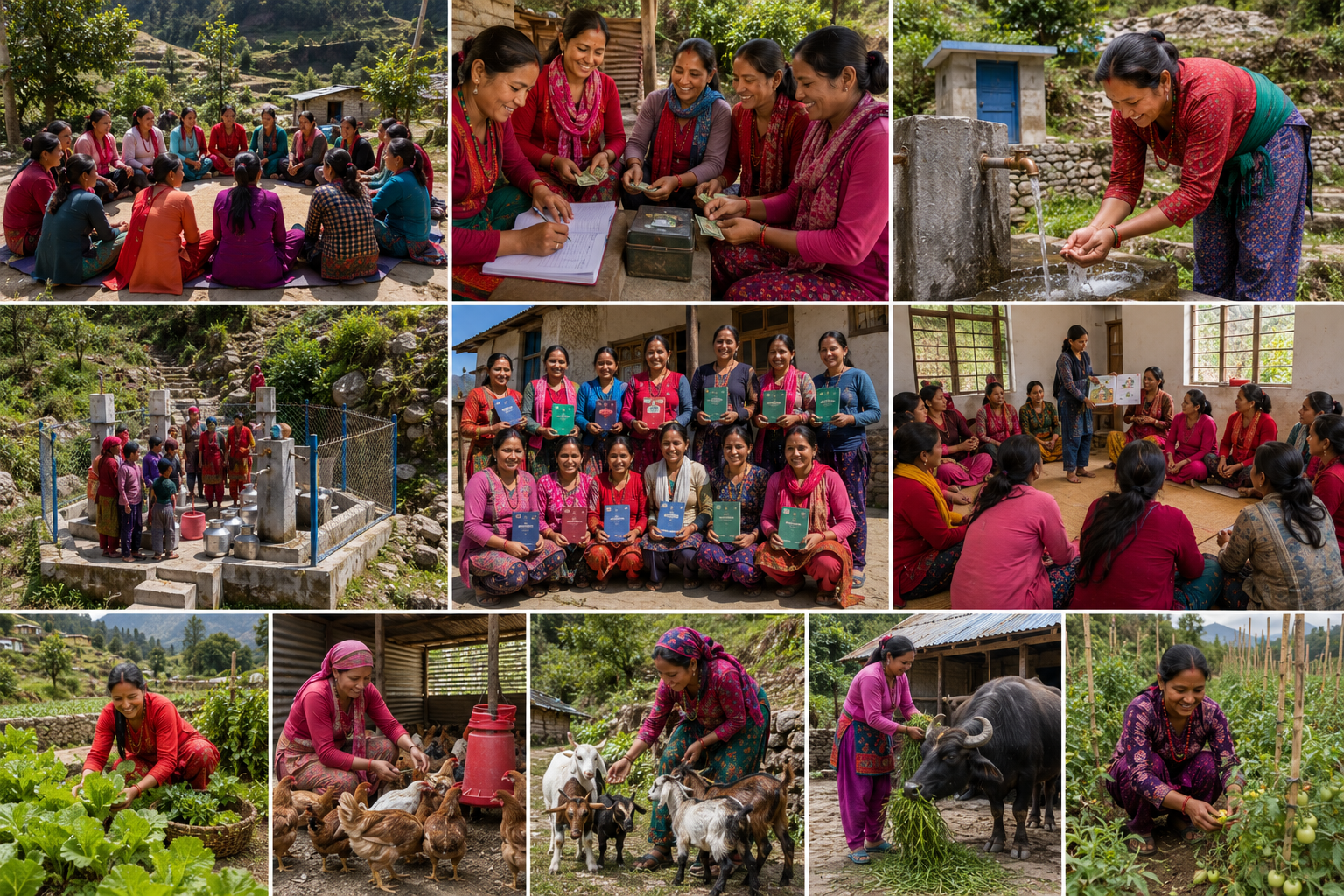
| Achievements | A total of 2,049 women were organized into Community-Based Organizations (CBOs), including 1,317 women in Savings and Credit Organizations (SCOs) and 1,657 women in Production Groups (PGs), of whom 1,011 were members of both PGs and SCOs. A total of 23 time-saving activities were identified and implemented in the selected clusters. One of these activities was the development of drinking water systems designed to provide safe, wholesome, and potable water. These systems also helped improve the sanitation status of the communities while reducing the time spent collecting water. The entire design was based on maximizing the capacity and discharge of available water sources. Altogether, 291 households, comprising 2,091 beneficiaries, benefited from the project. These drinking water projects significantly reduced the time women spent travelling long distances to collect water for household use and improved hygiene and sanitation in the local communities. As a result, women were able to utilize the time saved for income-generating activities. A total of eight drinking water projects were completed. A total of 13 SCOs were established. Of these, 12 SCOs accumulated savings exceeding Rs. 40,000, while 11 SCOs had savings of more than Rs. 70,000. All SCOs mobilized their savings for credit services, with 99% of the total savings disbursed as loans. Furthermore, eight SCOs met the minimum practical requirements for registration as cooperatives. A total of 1,647 members benefited from income-generating activities, including vegetable cultivation, poultry farming, goat rearing, and buffalo raising. Local communities were actively mobilized in various community development initiatives, enhancing their participation in income generation and employment opportunities. Members of SCOs and PGs were also provided with the sessions on legal rights to women as ensured by the Constitutions of Nepal. |