Distribution of Agricultural Inputs and Training support to Farmers
DEPROSC-Nepal successfully implemented the European Union Food Facility (EUFF) project in Jumla, Kalikot and Dolpa districts from March 15, 2010 to June 30, 2011. Through capacity-building trainings (Farmer Field School), demonstrations and improved seed commodities, the project served 15,751 beneficiaries/households, targeting minority groups, women/widows/persons with disabilities/the elderly/orphans, and households with children under 5 years or more than 5 children, who had access to arable land and were willing to engage in cultivation/farming practices.
| Donor | FAO/EUFF |
| Start date | March 2010 |
| End date | June 2011 |
| Project Districts | Jumla, Kalikot, Dolpa |
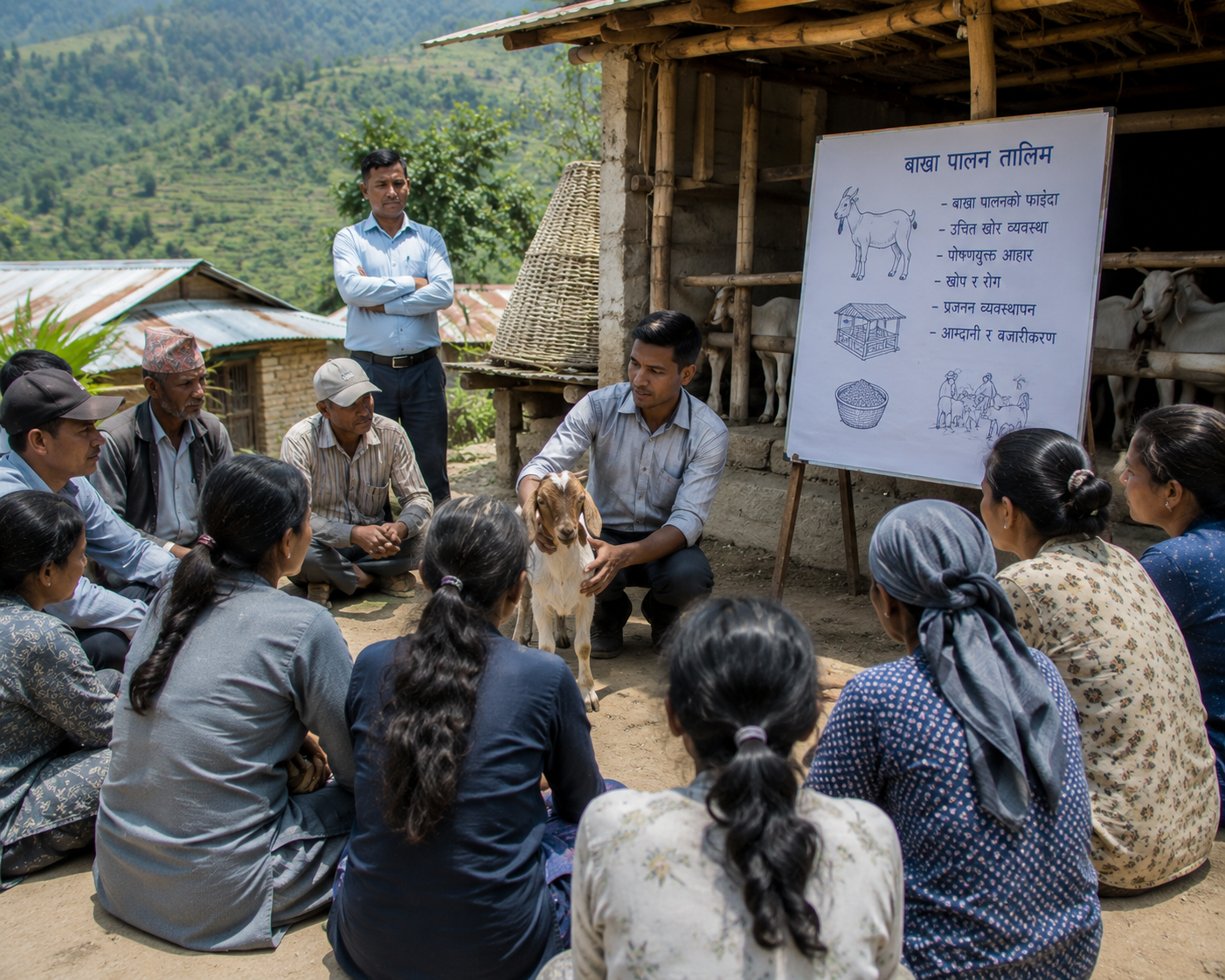
| Achievements | Seed was distributed in Jumla, Kalikot and Dolpa in three rounds: the first — composite packets of vegetable seed; the second — wheat; and the third — composite packets of vegetable seeds. A sixteen-week-long FFS was held in Jumla, covering agro-ecosystem analysis; preparation and application of botanical pesticides; the importance of seeds; germination and seed treatment; integrated soil nutrient management and compost preparation; and preparation of a crop calendar. An eight-week-long FFS was held in Jumla, covering the cropping calendar, gender matrix analysis, agro-ecosystem analysis, botanical pesticide preparation, zoo study of insects/pests, feeding behavior of insects, and study of soil profile. A crop-cutting survey of wheat was conducted in the Rarakihi and Kudari VDCs of Jumla. A total of 120 demonstrations were conducted in Dolpa, through which about 3,772 farmers received training on subjects such as compost preparation, nursery management, preparation of botanical pesticides, raising nursery beds and transplanting saplings. A two-day Training of Trainers, attended by 24 participants, was organized at the district headquarters of Jumla. Eleven beneficiary-level goat-keeping trainings were organized across 6 VDCs. A total of 3,996 wooden planks and 917 goats and bucks were distributed. Veterinary kits were distributed to farmers’ groups during mass meetings. Health camps were organized for both the newly distributed goats and existing goats kept at farmers’ homes. |