Feed the Future Nepal Knowledge-based Integrated Sustainable Agriculture in Nepal (KISAN) II Project
Knowledge-based Integrated Sustainable Agriculture in Nepal (KISAN) II Project was a USAID funded to contribute GoN’s Agriculture Development Strategy. The project’s overall goal was to increase resilience, inclusiveness, and sustainability of income growth through agriculture and market systems development. KISAN II worked with the private sector, such as lead firms, input suppliers, wholesalers and traders, and millers, to catalyze agricultural productivity, create competitive market systems, ensure a stronger enabling business environment, and promote business and literacy skills. The project reached 200,000 families through private sector actors in 25 districts of four provinces, Bagmati, Lumbini, Karnali, and Sudurpaschim. DEPROSC-Nepal was leading Component 4 (Increase the ability of vulnerable communities to act on business opportunities within selected market systems). It was also assisting the implementation of the financial services sector under Component 2 (Strengthen the competitiveness, resilience and inclusiveness of selected agricultural market systems).
| Donor | USAID |
| Start date | September 5, 2017 |
| End date | April 11, 2022 |
| Project Districts | 25 districts across province 3, 5, 6 and 7. |
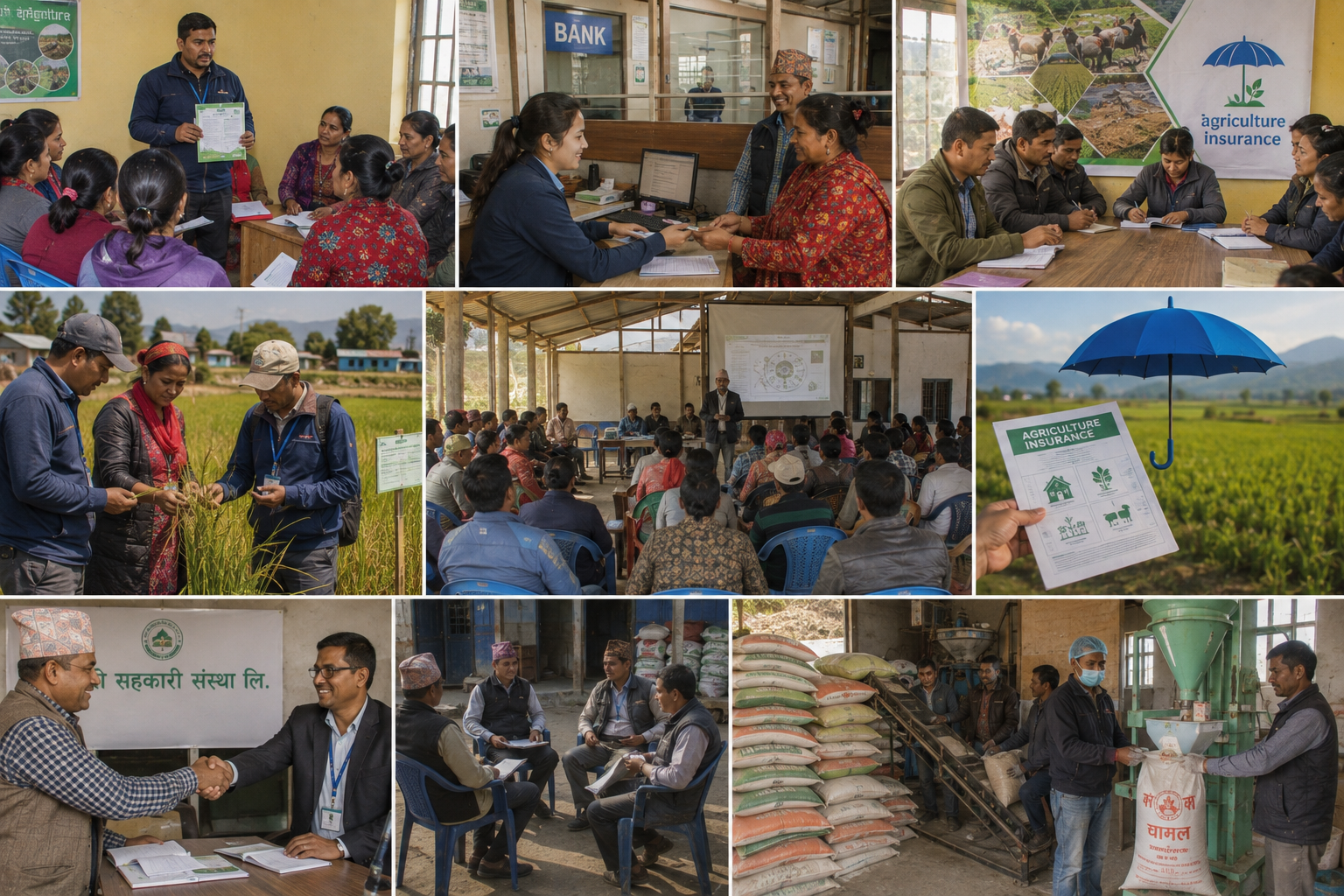
| Achievements | Increase access to financial services, institutional capacity building of partners and promotion of agriculture insurance. DEPROSC-Nepal engaged with the project grantees mainly agro-vets, cooperatives, rice mills, traders etc. during the course of implementation of both components. Partnership with bank and financial institutions, promoted group saving and credit activities and link with MFIs /SACCOs, facilitated partner cooperatives to obtain wholesale loan. Supported partner coops to prepare agriculture loan products to address the increasing demand of agriculture loan. Component 4 increased the ability of vulnerable households to act on business opportunities. For this, KISAN II has regularly updated its Business Literacy Program to respond to market shocks and opportunities. A two-month short course on farming as a business and agribusiness entrepreneurship was run targeting for literate, semi-literate, vulnerable school-leavers, and other commercially minded farmers and returned migrants until the literacy program ended. A ten-month long course was targeted to less literate households living usually at more remote settings and help them adopt agri-technologies through a broader course of contents such as – basic literacy, nutrition, life skills, entrepreneurship and access to finance. Project participating families were bridged with different service providers for their businesses to grow. |