Community based economic development Project (CBED)
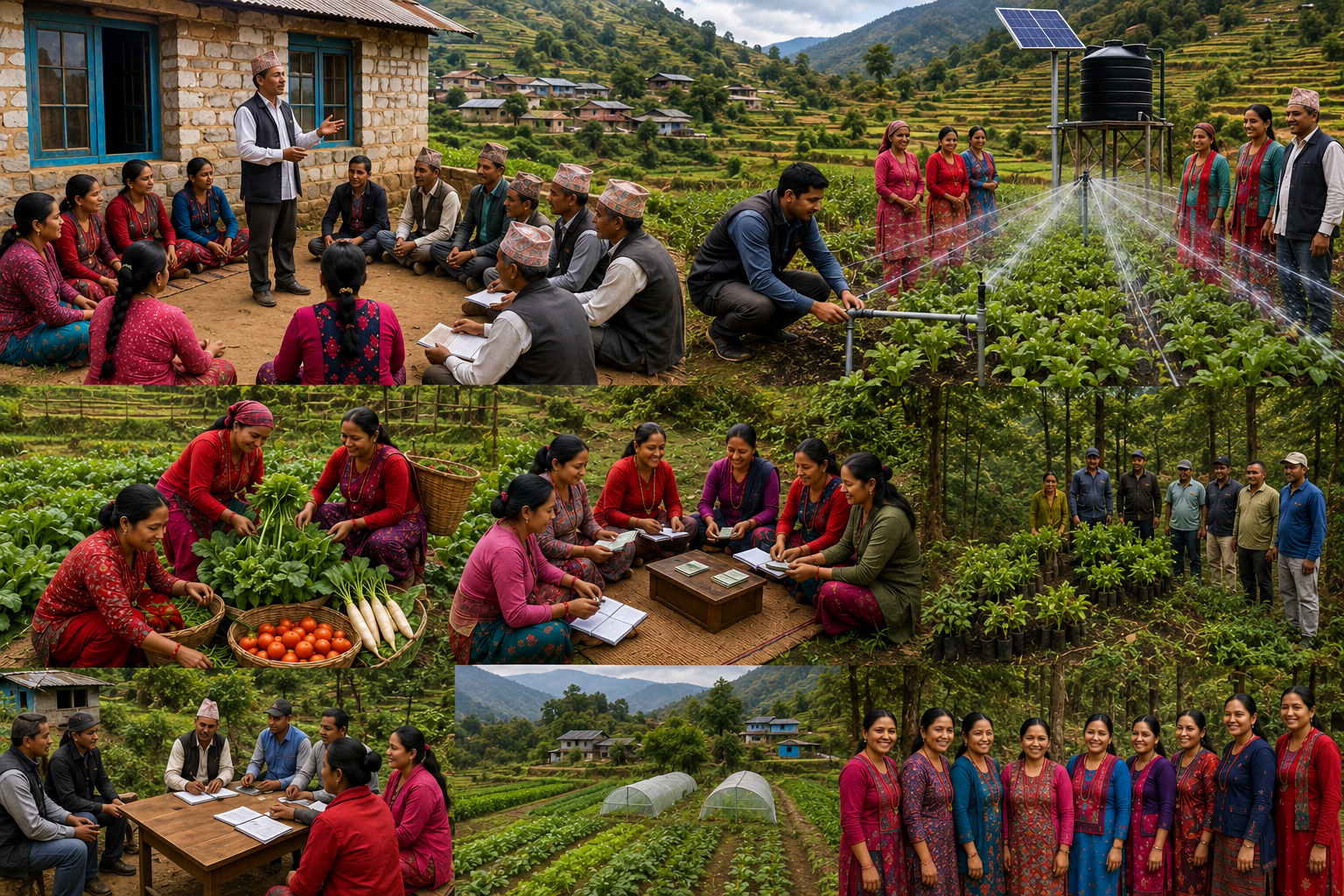
CBED is a bilateral project of the Canadian International Development Agency (CIDA) and His Majesty’s Government of Nepal. The executing agency was CECI and it worked with DEPROSC-Nepal as an implementing partner in Dadeldhura district. The objective of the project was to organize and strengthen Community-Based Organisations (CBO’s) to develop as viable institutions, capable of effectively managing natural resources, improving socio-economic conditions of their communities, as well as interacting with local elected officials and government agencies active at the district level. The project significantly contributed to strengthening civil society, promoting sustainable livelihoods, and improving local governance. It served as a model for integrated, community-driven rural development, demonstrating the power of locally-led economic empowerment and institutional development.
| Donor | CIDA/CECI |
| Start date | 1996 |
| End date | 2000 |
| Project Districts | Dadeldhura |
| Achievements | 248 Community-Based Organizations (CBOs) were promoted, including Producer Groups (PGs), Savings and Credit Organizations (SCOs), and Community Forest User Groups (CFUGs). Over 3,200 households were engaged in commercial agriculture, including vegetable, fruit, and seed production. 59 micro-irrigation schemes were constructed, providing irrigation to 277 hectares of farmland. 33 Savings and Credit Organizations (SCOs) were formed, of which 26 were registered as Savings and Credit Cooperatives (SCCs). The combined loan portfolio reached Nepalese Rupees (NRs) 20 million. 64 Community Forest User Groups (CFUGs) were supported, many of which began generating income and reinvesting in community development Strong collaboration between Community-Based Organizations (CBOs) and local government bodies such as District Development Committees (DDCs) and Village Development Committees (VDCs) emerged. CBOs were formally invited to participate in local planning and decision-making assemblies. CBED actively promoted gender equity, ensuring high female participation across training, decision-making, and leadership roles in CBOs. Women represented: 45%+ of SCO members, 50.89% of CFUG board members, and over 30% of board members in the Farmers’ Association |